|
Alex Elias 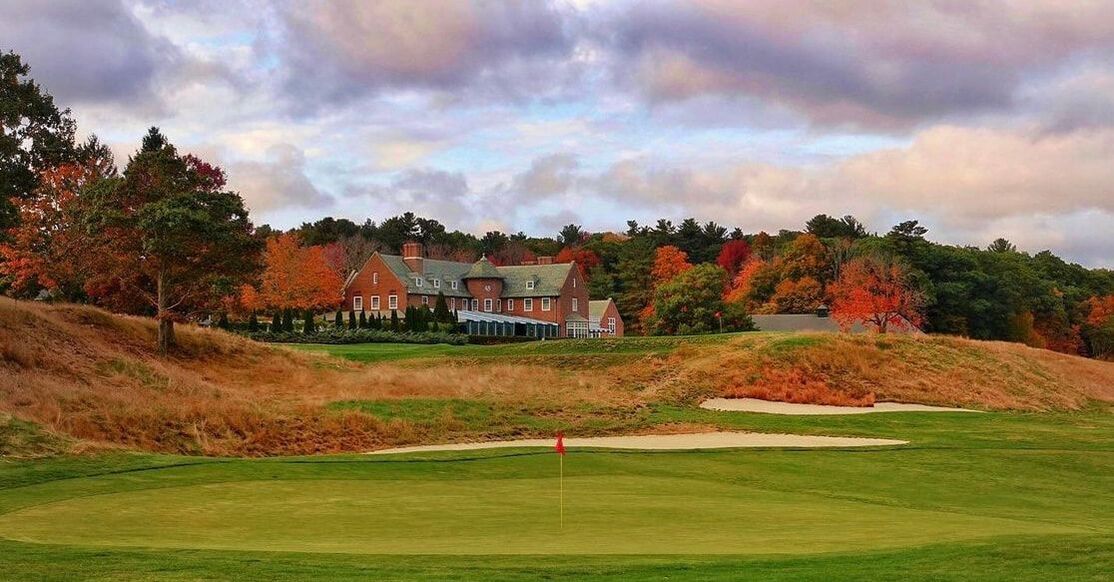 Courtesy of Jon Cavalier (@Linksgems) Jack Davis is the Head Golf Professional at Essex County Club (Manchester-By-The-Sea, Massachusetts). Essex County Club is the third ranked course in Massachusetts and 73rd ranked course in the United States, according to Golf Digest.
Earlier this week, after Tommy Fleetwood’s ace on No. 16 at Augusta, Fleetwood tweeted, “Ever have one of those rounds of golf when you’re so frustrated at this stupid game for not giving you what you deserve? Then, just when you're about to lose it, you hit THE shot that makes you realize why you're so hopelessly in love with it!” While the average golfer will more than likely never know what it’s like to hit an ace at Augusta, every golfer knows the feeling that Fleetwood described: expectations vs. reality. No matter one's handicap, every golfer has certain expectations and the endless fight to achieving those goals is what makes golf the greatest game. Speaking of expectations, Jack Davis, Head Golf Professional at Essex County Club, said, “I think from an expectations standpoint, people love watching golf on TV. I think the average golfer doesn’t appreciate how good you need to be to be a tour player. Your club champion, the distance between them and someone who is playing on tour is ten times wider than you can imagine.” Davis continued, “The golf industry is set up to influence you from the PGA Tour down, from what people are wearing, what clubs they’re playing and what courses they’re playing so a golfer’s expectations are pretty much set on what they see on TV.” As advice, Davis said, “Just keeping in mind you’re watching the top one hundred people in the world at what they do is a good barometer for what real life is like. Even the the most successful players in the world are hitting only 75% of the greens and 60% of the fairways.” Once realistic expectations are set, the drive to lower one’s handicap can truly begin. When asked how a club player can improve their game and lower their handicap, Davis responded, “Being a head professional at a private club, most of the members are playing here. The easiest way they can get better, without doing anything to their swing, is just learning the golf course. Making better decisions, making better club selections, being able to read lines, and understanding the wind. Then without spending five minutes on the range or getting a new driver, if you think differently, then you can already navigate your way around the golf course better.” Davis continued, “We still need to execute, but if I’m doing an on-course lesson, it’s almost like I’m trying to pretend to be a tour level caddy. I always tell my students: ‘If I were caddying for them in every round, without us worrying one minute about technique, I could save them five shots because of better decisions, better leaves, and accurately reading putts.’ It’s kind of a non-glamorous answer, but the first thing is becoming a better player by learning course management, rather than the time on the range or a new driver.” In regards to just how important course management is, Davis said, “Depending on the tee set up, the hole locations, the wind, how firm or soft the course is, what’s intriguing about golf is you’re playing a new thing everyday. A basketball court is a basketball court, but a golf course is different. If you play fifty rounds a year at your home course, then you’re making thousands of decisions each year and the same way that putting is a skill, making those decisions and learning how to get around a golf course is just as much a skill.” As an example Davis compared putting vs. chipping saying, “At what skill level, are you really going after a pin? If you aim for the center of the green, regardless of your skill level, having a thirty foot putt is probably better than a fifteen foot delicate chip.” Expectations and course management can become interwoven during any given round. A golfer may have expectations prior to his/her round, but once they’re on the course, those expectations can be dictated by course management. For example, if a golfer hits a poor tee shot, then their knowledge of the course needs to play a role in how realistic the expectation of saving par is. For instance, every golfer knows there is a such thing as a good bogey, as saving par could lead to even more trouble. Davis reflected on this notion saying, “Regardless of your skill level, you just have to be realistic. You got yourself into that trouble by not hitting an excellent shot, so why all of the sudden is your skill level going to triple and you’re going to be able to hit this low, carving punch-out from the trees.” Davis continued with his advice saying, “Get yourself back to a familiar position as soon as possible. Take a bogey and be okay with it. Maybe you can save par, but sometimes a bogey is a good score.”
0 Comments
Alex Elias  Courtesy of Jon Cavalier (@Linksgems) As many know, walking into a Top 100 Pro Shop can feel as if it’s Christmas morning. Although a Holderness & Bourne or B. Draddy polo are excellent on their own, there is an extra sense of pride when a polo or hat displays a particular club’s logo, even more so when it’s a club like Maidstone Club. When speaking of the membership, Jessica Cavolina, Golf Shop Manager at Maidstone Club, said, “They want to represent where they belong and they are really proud of it. They want to display their pride.” Cavolina continued, “Well it [the logo] tells a story. It gives us something to talk about. You see someone wearing a certain logo and right away it sparks a conversation.” As a golf shop manager at one of the country’s most prestigious clubs, Cavolina is perfectly positioned to witness the obsession surrounding golf merchandise first hand. While there is no denying the members at Maidstone love their club and their logo, the obsession surrounding golf merchandise may be even more visible when guests are fortunate enough to visit. Cavolina said, “We have guests that visit with members with an actual list written down. They visit and they leave having bought for like eight people, friends and family.” Cavolina continued, “I remember one guest last year in particular. He came into the shop with a list of items and asked, ‘Do you mind?’ I responded, ‘Do I mind? That’s awesome.’” As a result of items flying off the shelves, Cavolina is extremely busy doing the job she loves. Cavolina said, “When you need to sit down and put together a 2,000 piece hat order, it’s not as easy as it sounds. It makes my head want to explode, but it’s so fun and rewarding when you get that hat in your hand.”
Over Cavolina’s twenty-one years in the golf business, Cavolina has witnessed a change that she described as, “It’s always evolving and it’s always very cyclical. When I started, it was all about cotton polos and we didn’t sell many polyester polos. Then, Tiger started wearing the mock short sleeve shirt and members began to want to buy and wear that. Then, it went all the way poly and hardly any cotton and now it’s trending back to cotton.” Another example would be rope hats. Cavolina said, “Those were popular in the '80s and '90s and now they’ve come back. I can’t keep them in stock.” Currently, Cavolina said, “The whole trend in the golf industry is leaning towards lifestyle. It’s not for just golf anymore. They’re making golf clothes that can be worn to dinner.” Cavolina continued, “That’s why companies like Peter Millar saw what B. Draddy was doing and made their own B.Draddy shirt: The Seaside Collection, but you see what they’ve [B. Draddy] done too. They’ve added a sport line.” For this very reason, Cavolina said, “You have to constantly pay attention to what people are asking for and what they’re buying. I want to give you an outfit to get you out of the car, onto the course and off to dinner.” Alex Elias 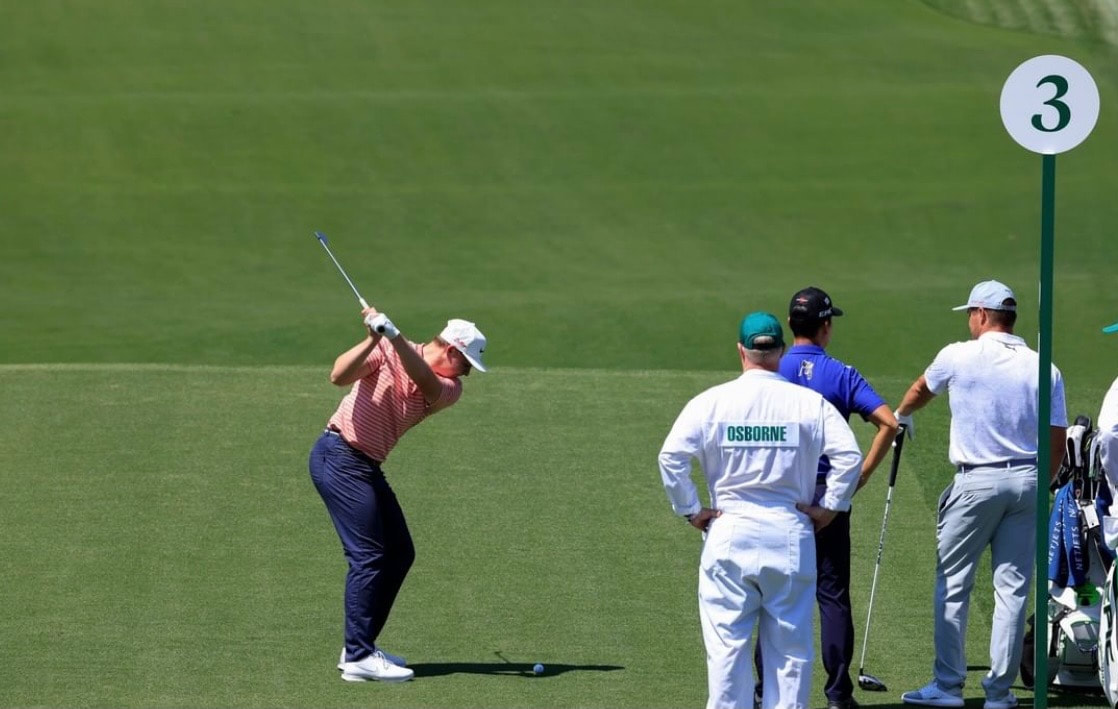 Tee Time: 12:24, Fred Couples, Francesco Molinari and Ollie Osborne (amateur) Charles "Ollie" Osborne, currently a junior at SMU, earned his spot in the field, as a result of finishing runner-up at the 2020 U.S. Amateur at Bandon Dunes Golf Resort. Osborne, set to make his first major appearance said, "Augusta is a place that I only dreamed to ever play as a kid. Now I’m able to play in the Masters, which is crazy to me. It’s awesome to see all these pros and be able to play with the best golfers in the world. It’s like Disneyland out here for me!" On Monday, Osborne played alongside former SMU golfer, Bryson DeChambeau, and Kevin Na in his first practice round. After the round, Osborne was asked about playing alongside DeChambeau and responded to reporters at Augusta saying, "I'd say a lot more mental than physical. He's [Bryson DeChambeau] taught me a lot about how to go about this week and kind of take it all in and have fun with it. It's hard to treat it like a regular week, of course, but kind of just go back to hitting those putts that you do everyday."
On Tuesday, Osborne played alongside Dustin Johnson, the 2020 Masters Champion, and Gary Woodland, the 2019 U.S. Open Champion. Osborne said, "It was so cool to play with guys I look up to and see on TV. They were the nicest they could have been and gave me a lot of advice about the course and life. It’s really cool to see these guys in their element and how nice they can be." Osborne tees off in Round 1 at 12:24 alongside Fred Couples and Francesco Molinari. He is one of three amateurs in the field, including Tyler Stafaci (Georgia Tech) and Joe Long (Winner of The British Amateur). |